Showing posts with label Archaeological Sights. Show all posts

PAWON TEMPLE

Posted by Unknown on Sunday, November 20, 2011

PAWON TEMPLE


Address: Desa Mendut, Magelang, Jawa Tengah, Indonesia
GPS Coordinate: S7°36'22" E110°13'10.3"

Candi Pawon (Pawon Temple)

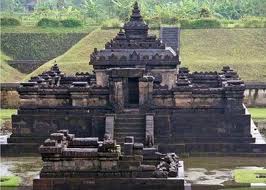
Pawon Temple is one and half kilometers westward from Mendut Temple and eastward from Borobudur Temple, it is also a Buddhist temple. When appreciating in detail, its sculpture is the beginning of Borobudur sculpture.
Pawon Temple is not a grave but as a place to keep King Indra's weapon namely Vajranala. This temple was built with volcanic stones. Architecturally it is a blend of old Javanese Hindu and Indian art. Pawon temple is exactly in the central point of the straight line stretched from Borobudur to Mendut Temple.
Perhaps it was built for kubera. It is on a wide rather terrace with steps. All parts are decorated with stupa(s) on dagoba(s) and its outside walls with symbolic pictures.
More aboutPAWON TEMPLE

Mendut Temple

Posted by Unknown

Candi Mendut (Mendut Temple)


Candi Mendut (Mendut Temple) is 3 kilometers eastward from Borobudur Temple. It is a Buddhist temple, built in 824 A.D. by King Indera of Cailendra dynasty.

There are three big statues inside, they are:

   1. Cakyamuni sitting in cross legged pose with dharma cakra mudra (= turning the wheel of dharma hand pose)
   2. Awalokiteswara, a bodhi satwa as human being helper.
      Awalokiteswara is a statue with Amitabha on her crown, Vajrapani. She is holding a red lotus and put on her palm.
   3. Maitreya, a savior of human beings in the future.

There are stories for children on its walls.

Candi Mendut (Mendut Temple) is frequently used to celebrate the Waisak day every May full moon and the pilgrims from Indonesia and all parts of the world come to this ceremony.

It is older than Candi Borobudur. Its architecture is square, and having an entrance on its steps. Its roof is also square and terraced. There are stupas (= bell-shaped structures) on it.


Map. GPS Coordinate: S7°36'17.3" E110°13'48.1" | S7.604806 E110.230028
More aboutMendut Temple

KEDULAN TEMPLE

Posted by Unknown on Thursday, November 17, 2011

KEDULAN TEMPLE

Address: Kalasan, Sleman, Yogyakarta, Indonesia
GPS Coordinate: S7°44'12.7" E110°28'13.2"

Revealing the Puzzle of the Ancient Dam nearby Kedulan Temple

Kedulan temple is a Hindu temple that is located in Kedulan village, about 3 kilometers from Kalasan temple. This temple was incidentally discovered by sand diggers on 24 November 1993. We will feel another pleasure visiting this temple since we can see the very sophisticated process of this temple reconstruction.

Arriving at the location of this temple, we can directly see as deep as 7 meters excavation location. There are scattered temple stones around the foot of the main temple that still looks intact. It is in this excavation located the complex of Kedulan temple consisting of 1 main temple and 3 supporting temples (perwara) originally stood. Now, the foot part of the temple is undergoing strength test for next stones overlaying process.

Walking around the excavation location, we will see the stones of the temple being renovated by matching each one to each other. The stones that have matched one to each other is given certain symbols using a chalk. Temporary construction of the temple open verandah, roof, compartments and some other parts of temple body looks there. There are also phallus and yoni that were supposed to be components filling the temple.

Some ornaments decorating the temple already show its beauty even though the temple itself is undergoing the reconstruction. The relief of a dragon under the yoni, for example, which is supposed to fill the principle room of the main temple, has different figure from the dragon decorating the other temple yoni in Central Java since it looks to have a jaw. There are also reliefs of deities, ivory decorations, rose-like decoration, and batik motif on some parts of the temple walls.

After walking around, YogYES interviewed a staff named Haryono. He told the difficulties of reconstructing the destroyed building. There are hundreds of stones to be matched in order to make the temple stands firmly as before, whereas there is no single indicators for the reconstruction. One worker can even match only one pair of stones in a week because of the difficulty. That's true; it's like composing a giant puzzle!

If we get into the information room close to the excavation location, we can see the design of expected Kedulan temple. From the design, we can notice the height of the main temple will be 8 meters, composing of the foot, body, and roof. The temple body consists of 10 stone layers as high as 2,4 meters, with some cavities for Ganesha, Agastya, Durga, Nandaka and Nandiswara statues, with narrow verandah that is predicted only certain people can go inside. The temple roof consists of 13 layers of stones. From the above information, it can be predicted that its architecture is entirely similar to Sambisari temple.

In the information room, too, we can see ruins of decorated bowls and earthenwares that were supposed to be utilized during the ceremony rituals in this temple. Besides, there is also wood originating from the trees growing in the time of the temple construction. Haryono told that once there was someone took some of the wood to make a sculpture but then the person returned it back since he experienced unlucky occurrence.

Photographs of other goods found during the excavation can be seen in the information room. There is a photograph of deity statue from bronze and photographs of Pananggaran and Sumudul inscriptions that were discovered in 2003. On the wall of the room, there are descriptions of the soil layers were the temple was discovered, and photographs depicting the excavation process that lasted for years.

On 12 June 2003, two inscriptions were found in the excavation location. The inscriptions that were written in Pallawa characters in Sanskrit language have been read by two epigraphs from Archeology Department of Gadjah Mada University, namely Dr Riboet Darmoseotopo and Tjahjono Prasodjo MA. Dated 791 Saka (869 AD, or around 10 years after the construction of Prambanan temple), it contains land tax holiday in Pananggaran and Parhyangan villages, construction of irrigation, and foundation of a holy building called Tiwaharyyan and curse threat for anyone who did not comply with the rules.

Some archeologists predicted that those inscriptions are related to the foundation of Kedula temple. The Tiwaharyyan holy building is predicted to be Kedulan temple itself. Pananggaran village in the inscription is predicted to be situated around the temple area, as it is to be of the ancient dam. The dam was possibly constructed in Opak River that is ±4 kilometers from the temple location, or possibly in the river that now is not seen anymore because of the volcanic mudflow resulted from the eruption of the Merapi Mountain a thousand years ago.

Many puzzles waiting for solving and the enchantment of the temple components make the tour to Kedulan Candi worths doing. The condition of the temple under reconstruction even adds to our pleasure.

Text: Yunanto Wiji Utomo
Photo & Artistic: Agung Sulistiono Mabruron
English Translation: Emanuel, Downhill English Services

Copyright © 2007 YogYES.COM
More aboutKEDULAN TEMPLE

GAMPINGAN TEMPLE

Posted by Unknown

Reading the Message from Nirvana in Gampingan Temple

GAMPINGAN TEMPLE

Address: Piyungan, Bantul, Yogyakarta, Indonesia
GPS Coordinate: S7°50'7.2" E110°26'11.9"


Reading the Message from Nirvana in Gampingan Temple

Not all temples have typical, beautiful relief since generally they are decorated with statues and general relief as those found in almost all other temples. One of the temples with specific, beautiful relief is Gampingan, a temple that was incidentally found by a brick craftsman in Gampingan Village, Piyungan, Bantul in 1995. Small and incomplete, Gampingan temple is still rich in the enchanting relief.

One of the reliefs that we can see in this temple is the animal relief at the foot of it. The animal relief in this temple looks so natural that we can name the described animals. It is quite rare to find such relief; at least, they are only Prambanan and Mendut temples that have similar relief. All of the reliefs are decorated with ivory plant, namely padmamula (the roots of lotus plant) that is believed to be the source of life.

When YogYES walked around the temple, it clearly look that birds dominate the decoration. There is a relief of a raven with its big beak, robust body, up stretching wings and the fan-like tail. There is also a relief of a woodpecker that is described to have a crest on its head, rather long, pointed beak, and not-stretched wings. Besides, there is also a crow with distended chest and wings stretching downward.

The making of many bird reliefs in this temple relates to community belief in transcendental power of birds. It was believed that birds are manifestation of the deities or nirvana. Birds are also related to human absolute freedom that is attained after the renunciation, the symbol of human soul that leaves its body.

Other animal that is often described in the temple is frog. The community believed that frogs have supra natural power to send rain so that it was also believed to increase productivity, because the rain will be able to increase the harvest. The frogs that usually come up from waters also symbolize life renewal and the awakening towards better direction.

The relief still leaves a question of whether it is a fable (the animal story told to children) like the one in Mendut temple or a description of animals that was intentionally made to denote certain meaning. Such question rises because the description of the animals in the temple was not found in any books containing fables such as Jataka, Sukasaptati, Pancatantra and its hereditary versions.

Gampingan temple that is predicted to be built between 730 - 850 AC is believed to be the place for adoring Jambhala (god of prosperity, the child of Siva). The idea is based on the finding of Jambhala statue in the digging process. Jambhala is described to have been meditating; sitting crossed-legged while closing the eyes. The body was decorated by iconographical element (asana) in the form of a lotus with 8 pieces of leaves as the symbol of Vishnu mystical weapon (cakra) in the human body.

The figure of Jambhala in this temple is different from those in other temples. Generally, Jambhalas in other temples are described with wide eyes looking at the worshippers with various accessories symbolizing prosperity and luxury. This different description is believed to be based on the worship motivation, not to invoke prosperity but guidance in order to achieve the real happiness.

Visiting Gampingan temple will lead us to remembering the path we have taken to achieve happiness and prosperity. Relief that is dominated by animals that live in the surrounding environment could be the realization of local community's wisdom by that time in representing a message from nirvana: mankind must keep the harmony of nature in order to live in prosperity and to avoid disaster.

Text: Yunanto Wiji Utomo
Photo & Artistic: Agung Sulistiono Mabruron
English Translation: Emanuel, Downhill English Services

Copyright © 2007 YogYES.COM
More aboutGAMPINGAN TEMPLE

TARA TEMPLE

Posted by Unknown


Tara temple
Address: Jl. Jogja-Solo km 13 Kalasan, Yogyakarta 55282, Indonesia
GPS Coordinate: S7°46'2.3" E110°28'19.8"


Tara Temple, the Oldest Buddhism Inheritance in Yogyakarta

Most people will mention Borobudur when talking about Buddhism temples. Whereas, there are many other Buddhism temples in Yogyakarta; one of them that is closely related to Borobudur is Tara temple. This temple that is located in Kalibening village in Kalasan was built by the same person who conceptualized Borobudur temple, namely Rakai Panangkaran. Since it is located in Kalasan area, this temple is popular with the name of Kalasan temple.

Completed in 778 AD, Tara temple becomes the oldest Buddhism temple in Yogyakarta. This temple that is situated close to Yogya-Solo Street was a present of the marriage of Pancapana of Sanjaya dynasty to Dyah Pramudya Wardhani of Syailendra dynasty. In addition to a marriage present, the temple was also realization of the kings' proposal to build another holy temple for goddess Tara and a monastery for the monks.

Tara temple is a building in the form of a cube with the size of each side of 45 meters and 34 meters high. Vertically, this temple consists of three parts, namely temple foot, temple body and temple roof. The foot of the temple is a building on square stones and a wide stone. On this part, there is a stair with makara ornament at the end. Meanwhile, around the temple foot there are ornaments of climbing plants that come out from pots.

The body of the temple protrudes at the central side. At the outer surface of the temple body, a hollow is ornamented with a standing goddess holding lotus. In southeast part, there is a small room with throne ornamented with the motif of a lion standing on an elephant's back. The room can be accessed from the other room at the east side.

The roof of the temple is octagonal and consists of two stories. An effigy describing Buddha is located in the first story while on the second story there is a statue describing Yani Buddha. The top of the temple is a square symbolizing Semeru summit with ornaments of domes. At the interface of the temple body and the roof, there is a flower ornament of a dwarf named Gana.

If you observe the temple in detail, you will also find beautiful relief on its surface; for example, relief of tree of god and cloud and the dwellers of the heaven producing sounds. The dwellers of the heaven hold rebab (two-stringed music instrument), shell, and camara. There are also ornaments of flowers, leaves and climbing plants. Relief at Tara temple is typical since they are coated with special cement called Brajalepha, made from sap of certain tree.

Around the temple, there are 52 domes as high as around 4.6 meters. Even though those domes are not intact anymore, since some parts are missing, you can still enjoy them. Visiting this temple of which construction history is known from Candi inscription in Panagari letters, you will acknowledge the greatness of Rakai Panangkaran who even had the opportunity to build a holy building in Thailand.

This temple also proves that in the past there was an effort to unite people of different religions. The proof is that Panangkaran who was a Hindu built the Tara temple in response to the proposal of Buddhism monks to be presented to Pancapana who is also a Buddhist. This temple is also one of the holy buildings that inspired Atisha, a Buddhist from India who once visited Borobodur and spread Buddhism to Tibet.

Text: Yunanto Wiji Utomo
Photo & Artistic: Singgih Dwi Cahyanto
Copyright © 2006 YogYES.COM
More aboutTARA TEMPLE

PLAOSAN TEMPLE

Posted by Unknown on Tuesday, November 15, 2011

PLAOSAN TEMPLE


Address: Dukuh Plaosan, Desa Bugisan, Prambanan, Jawa Tengah 57454, Indonesia
GPS Coordinate
: S7°44'33.5" E110°30'16.7" 

Plaosan Temple, the Twin Temple in Yogyakarta

After visiting Prambanan temple, you should not rush to your hotel, because close to the beautiful Hindu temple, you can also see other interesting temples. Moving 1 kilometer northwards, you will find Plaosan Temple; a temple constructed by Rakai Pikatan for her wife, Pramudyawardani. The architect of the temple that is located in Bugisan village of Prambanan sub-district is combination of Hindu and Buddha.

Plaosan complex is divided into 2 groups, namely the North Plaosan Temple and the South Plaosan Temple. Both of the temples have square terrace that is encircled by wall, a pillbox for meditation at the west part and dome on other side. Because of that similarity, the appearance of both temples are the same when they are seen from distant so that Plaosan temple is also called the twin temples.

The North Plaosan Temple has middle courtyard encircled by wall with the entrance at the west side. In the middle of the courtyard, there is a hall as wide as 21.62 m x 19 m. At the eastern part of the hall, there are 3 altars, namely north, east and south altars. The pictures of Amitbha, Ratnasambhava, Vairochana, and Aksobya are at the east altar. Samantabadhara statue and Ksitigarba figure is at the north altar, while Manjusri picture is at the west alter.

The South Plaosan temple also has a hall at the center that is encircled by 8 small temples that is divided into 2 ranks and each rank consists of 4 temples. There also pictures of Tathagata Amitbha, Vajrapani with vajra attribute at the utpala and Pranjaparamita who was considered "the mother of all Buddha". Some other pictures can still be found but not at their original places. Manujri figure that according to a Dutch scientist named Krom is significant can also be seen.

Part of this bas relief has unique picture of man and woman. There is a man described as sitting cross-legged with worshipping hands and a figure of a man with vara mudra and vse at his leg encircled by six smaller men. A woman is described as standing with vara mudra hands, while there are book, pallet, and vase around her. Krom explains that figures of those man and woman are descriptions of supporting patron from two monasteries.

The entire complex of Plaosan temple has 116 ancillary domes and 50 ancillary temples. Ancillary domes can be seen on each side of the main temple, as can smaller ancillary temples. Walking northwards, you can see open building called Mandapa. Two inscriptions can also be found; they are the inscription on gold coin at the north of the main temple and an inscription written on a stone in the first line of the ancillary temples.
One of the characteristics of Plaosan temple is the smooth surface of the terrace. Krom explains that such a terrace is different from other temples of the same time. To his opinion, it is related to the function of a temple by that time that is predicted to keep canonical texts owned by Buddhist monks. Other prediction by Dutch scientists, if the number of monks in that area is small then the terrace might be used as a place for Buddhists to pray.

If you go around the temple complex, you will notice that the complex of Plaosan temple is wide. That can also be noticed from long fence stretching 460 meters from north to south and 290 meters from west to east. There is also moat inside stretching as long as 440 meters from north to south and 270 meters from west to east. The moat can be seen by walking eastwards through the middle part of this historical building.

Text: Yunanto Wiji Utomo
Photo & Artistic: Singgih Dwi Cahyanto
Copyright © 2006 YogYES.COM

More aboutPLAOSAN TEMPLE

SAMBISARI TEMPLE

Posted by Unknown on Monday, November 14, 2011

Sambisari Temple


Address: Kalasan, Sleman, Yogyakarta, Indonesia
GPS Coordinate: S7°45'44.9" E110°26'48.7"
Mr. Karyowinangun did not have any hunch of what was going to happen on one early morning in 1966. When he was preparing the ground for cultivation with his hoe, he felt it bumping a big stone. When he checked it, he saw carvings on the stone. Karyowinangun and the local people wondered about the existence of the stone.

Knowing the discovery, the archeological department came to the site and defined Karyowinangun's field to be archeological site. The carved stone was supposed to be part of a temple that possibly was buried in the area. Excavation was then executed to find hundreds slabs of stone and ancient statues. It turned to be true that those stones were components of a temple.

After 21 years, we can enjoy the beauty of the temple. The temple building named Sambisari stands grandly in Sambisari Village, Purwomartani Sub-District, Kalasan District, Sleman Regency, 10 kilometer away from Yogyakarta city center. You can reach this place by going eastward through the Yogya-Solo road until you see a signboard directing to this temple. Then, you turn left to follow the road.

Arriving at the area of the temple, YogYES first got surprised. Looking at the center of the temple area, there was an only pile of stones of less than 2 meters high. YogYES wondered if it Sambisari temple was that small? Approaching nearer, we will find the answer. In fact, Sambisari temple is 6,5 meters below the surrounding land.

Sambisari temple is predicted to be constructed between 812 - 838 AD, possibly under the government of Rakai Garung. The complex of the temple consists of 1 main temple and 3 supporting temples. There are 2 fences surrounding the temple complex, on the fences was totally reconstructed, while the other was only showed a little in the east side of the temple. Still function as borders, there are 8 stand phalluses distributed in each point of direction.

The main temple building is unique since it does not have shoe basement like other temples in Java. At the same time, the foot of the temple functions as the foundation to make the temple even on the ground. The foot part of the temple is left plain, without reliefs or decorations. Various elements most of them are of plants ornaments are found on the body to the outer part of the temple top. The ornaments look like batik motif.

Stepping up the stairs of the entrance of the temple, we will see an ornament of a dragon in the open mouth of makara (the magical animal in Hindu mythology). The figure of makara in Sambisari is an evolution of the makara form in India that can be in the form of a unification of elephant and fish or a crocodile and curved-tail fish.

The narrow verandah as wide as 1 meter will be found after passing through the last stair of the main temple entrance. Walking around it, you will see 3 cavities with one statue in each of them. In the north part, there is a statue of Durga (the wife of Siva) with 8 hands each of which is holding a weapon. Meanwhile, in the east side, there is Ganesha statue (son of Durga). In the southern side, there is Agastya statue with aksamala on his neck.

Entering the primary compartment of the temple, we can see quite big phallus and yoni measuring at around 1.5 meters. Its existence shows that this temple was build as the place for worshipping Siva. The phallus and the yoni behind this temple were also used to make the holy water. Usually, the water is poured on the phallus and let flow toward the small ditch on the yoni, then it is accommodated in a container.
Exiting from the main temple to go westwards, we will be able to see the three supporting temples (perwara) standing in the opposite direction. There was a prediction that this perwara temple was intentionally constructed without roof because when excavation was done, no roof stones were discovered. The inner part of the central supporting temples (perwara) has a square saucer decorated with dragon ornament and a padmasana on it. Possibly, padmasana and the saucers were utilized as places for statues or offerings.

When we have been satisfied with enjoying the beauty of the temple, we may leave for the information room. Some photographs featuring the rice field owned by Mr. Karyowinangun before the excavation and the early condition of the temple at the early time of the discovery. There are also photographs of the excavation processes and the temple reconstruction that lasted for tens of years, including the photographs of other goods such as bronze statues found during the excavation that are kept in Building of Archeological Heritance Preservation.

The beauty of Sambisari temple that we can enjoy at present time is the result of hard works of the archeologists for 21 years. The temple that initially looked like a giant puzzle was reconstructed piece by piece for the continuation of one more heritance of the great culture in the past.
Text: Yunanto Wiji Utomo

Photo & Artistic: Agung Sulistiono Mabruron
English Translation: Emanuel, Downhill English Services
Copyright © 2007 YogYES.COM

More aboutSAMBISARI TEMPLE

KINK BOKO PALACE

Posted by Unknown

kink boko palace 

Address: Jalan Raya Jogja-Solo, Prambanan, Yogyakarta, Indonesia
GPS Coordinate: S7°46'17.9" E110°29'24.9"
King Boko Palace was a glorious building that was constructed during the reign of Rakai Panangkaran, descendant of Sailendra dynasty. The palace that initially was named Abhayagiri Vihara (that means a monastery on a peaceful hill) was built for seclusion purpose and to focus on spiritual life. From this palace, you will feel peace and will be able to see Yogyakarta city and Prambanan temple with Merapi Mountain as the background.

This palace is located 196 meters above the sea level. The area of the palace as wide as 250,000 m2 is divided into four, namely center, west, southeast, and east parts. The center part consists of the main gateway, square, Combustion Temple, pond, square terrace and assembly hall. Meanwhile, the southeast part includes hall, platform, three temples, pond, and a complex for princess. The caves, Buddha effigy, and a pond are in east part while the west part consists of hills only.

If you enter from the palace gateway, you will directly be guided to the center part. Two high gates will welcome you. The first gate has three entrances while the second one has five. If you look it in detail, you will read 'Panabwara' writing on the first gate. Based on Wanua Tengah III inscription, the word was written by Rakai Panabwara (the descendant of Rakai Panangkaran) who took over the palace. The intention of carving his name on the gate was to legitimate his authority, to give 'power' to the gate in order to look more glorious and to give sign that the building was the main building.

About 45 meters away from the second gate, you will see a temple made of white stones so that it was named Candi Batu Putih or Temple of White Stones.

Close to the place, you will also find Combustion Temple. The temple is of square form (measuring 26 meter x 26 meter) with two terraces. The function of the temple is to burn dead body as the name suggests. Around 10 meters away from the Combustion Temple, there are sacred terrace and a pond.

A mysterious well will be seen if you walk southeastward of the Combustion Temple. As the legend tells, the well was named Amerta Mantana that means sacred water treated with charms. At present time, the water of Amerta well is still used. The legend tells that the water brings luck for anyone who uses it. Hindu people use it in Tawur Agung ceremony, one day before the Nyepi day. Using water in the ceremony is believed to support the achievement of the objective, namely to self purify and to return the earth and its content to its initial harmony. YogYES suggests that you visit Prambanan temple one day before Nyepi day to see the ceremony process.

Moving to the eastern part of the palace, you will see two caves, big pond measuring 20 meters x 50 meters and Buddha effigy that sits quietly. Those two caves were formed of sediment stones. The upper cave is called Gua Lanang (Male Cave) and the lower cave is called Gua Wadon (Female Cave). Right in front of Gua Lanang, there is a pond and three effigies. Based on the research, the effigy is known as Aksobya, one of Buddha Pantheons.

Even though it was built by a Buddhist, there are Hindu elements in it. This can be seen from the presence of Lingga and Yoni, Ganesha statue, and golden plate with the writing "Om Rudra ya namah swaha" on it as form of worship to Rudra as the other name of Shiva. The Hindu elements proved religious tolerance that is reflected in architectural works. In fact, Rakai Panangkaran who embraced Buddhism lived side by side with Hindu people.

Not many people know that this palace is witness of the initial triumph in Sumatera land. Balaputradewa once fled to this palace before leaving for Sumatra when he was struck by Rakai Pikatan. Balaputradewa rebelled because he felt to be second person in the reign of Old Mataram Kingdom because of Rakai Pikatan's marriage to Pramudhawardani (Balaputradewa's sister). After his defeat and escape to Sumatra, he became the king of Sriwijaya Kingdom.

As a heritage building, King Boko Palace is different from other inheritances. Most of other buildings are in the forms of temple or shrine, while this place - as the name implies - shows characteristics of a dwelling place. This can be known from the wooden poles and roofs, even though we can only see remains of stone building. Investigate the palace in more details and you will know more. One of them is the beautiful scenery when the sun is setting in the west. An American tourist says, "This is the most beautiful sunset on earth."
Text: Yunanto Wiji Utomo
More aboutKINK BOKO PALACE

IJO TEMPLE

Posted by Unknown

Ijo Temple 
Address: Bukit Ijo, Desa Sambirejo, Prambanan, Sleman, Yogyakarta, Indonesia
GPS Coordinate: S7°47'2.2" E110°30'44.2"

Ijo Temple, the Temple Located at the Highest Place in Yogyakarta

Going along the street leading to the southern part of Queen Boko Palace complex is such an exciting journey, especially for cultural tourism lovers. The reason is that there are so many temples mushrooming in that area. One of them that is rarely talked about is Candi Ijo or Ijo Temple; one temple of which location is the highest compared to other temples in Yogyakarta.

Ijo Temple was built in around the ninth century on a hill named the Green Hill of which height is 410 meters above the sea level. Because of this height, we can enjoy not only the temple but also natural view below such as terraces of agriculture land with its steep slope. Even though this is not a fertile area, natural view around the temple is so beautiful to enjoy.

The complex of the temple consists of 17 building structures that are divided into 11 terraces. The first terrace functioning as the yard leading to the entrance is a terrace with staircase stretching from west to east. The building on the eleventh terrace is in the form of encircling wall, eight pole phallus, four buildings namely the main temple, and three ancillary temples. The placement of the building on each terrace is based on the level of its being sacral. The building on the highest terrace is the most sacral.

Variants of painting are found since the entrance of this Hindu temple. Right on the entrance gate, there is a motif of double head giant and some of its attributes. Such motif and attributes found in Buddhist temples show that such temples are acculturation forms of Hindu and Buddha cultures. Some temples having such giant motif are Ngawen, Plaosan and Sari.

There is also a statue describing flying woman and man directing to certain side. Such description can have some meanings; first, as spells to expel evil spirit and second as symbol of unity between god Siva and goddess Umi. The unity is meant as the onset of universe creation. Different from the statues in Prambanan Temple, natural style of the statues in Ijo Temple do not lead to eroticism.

Approaching the ancillary temples on the eleventh terrace, there is a pit possible used to burn sacrifice. Right on the upper part of the pit back wall there are ventilations in the forms of trapezium and triangle. The pit reflects the Hindu community that adores Brahma, the god of fire. The three ancillary temples show community adoration to the three Hindu gods, namely Brahma, Siva, and Vishnu.

Some of the works that keep mystery are two inscriptions located in the temple building on the ninth terrace. One of the inscriptions is coded by letter F with the writing Guywan or Bluyutan meaning place for meditation. Another inscription is made of stone as high as 14 cm and as thick as 9 cm containing magic spells that are predicted to be curses. The magic spells were written 16 times and parts of them read "Om Sarwwawinasa, Sarwwawinasa." The two inscriptions may relate closely to certain occurrences in Java by that time. What were the occurrences? They are not revealed yet up to now.

Visiting this temple, you will find beautiful scenery that other temples do not have. Looking down westwards, you will see airplane taking off and landing at Adisutjipto International Airport. You see this scenery because the Seribu Mountains where Ijo Temple is located is the border of the east part of the airport. It is because of the presence of this temple that Adisutjipto Airport cannot be lengthened eastwards.

Each detail of the temple presents meaningful thing and invites the visitors to make a reflection so that the journey will not just be fun time. Great paintings without the name of the creators show life philosophy of the past Javanese community that emphasized more on moral message presented by the works rather than the creators or the greatness of their works.

Text: Yunanto Wiji Utomo
Photo & Artistic: Singgih Dwi Cahyanto
Copyright © 2006 YogYES.COM
More aboutIJO TEMPLE

PRAMBANAN

Posted by Unknown

Prambanan
Address: Prambanan, Sleman, Yogyakarta, Indonesia 
GPS Coordinate: S7°45'7.1" E110°29'28.1"
Prambanan, the Most Beautiful Hindu Temple in the World

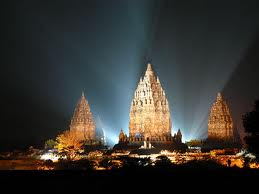
Prambanan temple is extraordinarily beautiful building constructed in the tenth century during the reigns of two kings namely Rakai Pikatan and Rakai Balitung. Soaring up to 47 meters (5 meters higher than Borobudur temple), the foundation of this temple has fulfilled the desire of the founder to show Hindu triumph in Java Island. This temple is located 17 kilometers from the city center, among an area that now functions as beautiful park.

There is a legend that Javanese people always tell about this temple. As the story tells, there was a man named Bandung Bondowoso who loved Roro Jonggrang. To refuse his love, Jonggrang asked Bondowoso to make her a temple with 1,000 statues only in one-night time. The request was nearly fulfilled when Jonggrang asked the villagers to pound rice and to set a fire in order to look like morning had broken. Feeling to be cheated, Bondowoso who only completed 999 statues cursed Jonggrang to be the thousandth statue.

Prambanan temple has three main temples in the primary yard, namely Vishnu, Brahma, and Shiva temples. Those three temples are symbols of Trimurti in Hindu belief. All of them face to the east. Each main temple has accompanying temple facing to the west, namely Nandini for Shiva, Angsa for Brahma, and Garuda for Vishnu. Besides, there are 2 flank temples, 4 kelir temples and 4 corner temples. In the second area, there are 224 temples.

Entering Shiva temple, the highest temple and is located in the middle, you will find four rooms. One main room contains Shiva statue, while the other three rooms contain the statues of Durga (Shiva's wife), Agastya (Shiva's teacher), and Ganesha (Shiva's son). Durga statue is said to be the statue of Roro Jonggrang in the above legend.

In Vishnu temple, to the north of Shiva temple, you will find only one room with Vishnu statue in it. In Brahma temple, to the south of Shiva temple, you find only room as well with Brahma statue in it.

Quite attractive accompanying temple is Garuda temple that is located close to Vishnu temple. This temple keeps a story of half-bird human being named Garuda. Garuda is a mystical bird in Hindu mythology. The figure is of golden body, white face, red wings, with the beak and wings similar to eagle's. It is assumed that the figure is Hindu adaptation of Bennu (means 'rises' or 'shines') that is associated with the god of the Sun or Re in Old Egypt mythology or Phoenix in Old Greek mythology. Garuda succeeded in saving his mother from the curse of Aruna (Garuda's handicapped brother) by stealing Tirta Amerta (the sacred water of the gods).

Its ability to save her mother made many people admire it to the present time and it is used for various purposes. Indonesia uses the bird as the symbol of the country. Other country using the same symbol is Thailand, with the same reason but different form adaptation and appearance. In Thailand, Garuda is known as Krut or Pha Krut.

Prambanan also has panels of relief describing the story of Ramayana. Experts say that the relief is similar to the story of Ramayana that is told orally from generation to generation. Another interesting relief is Kalpataru tree that - in Hindu - the tree is considered tree of life, eternity and environment harmony. In Prambanan, relief of Kalpataru tree is described as flanking a lion. The presence of this tree makes experts consider that Javanese society in the ninth century had wisdom to manage its environment.

Just like Garuda, Kalpataru tree is also used for various purposes. In Indonesia, Kalpataru is used as the logo of Indonesian Environment Institution. Some intellectuals in Bali even develop "Tri Hita Karana" concept for environment conservation by seeing Kalpataru relief in this temple. This tree of life is also seen in the gunungan (the puppet used as an opening of traditional puppet show or wayang kulit). This proves that relief panels in Prambanan have been widely known throughout the world.

If you see the relief in detail, you will see many birds on them; they are real birds as we can see on the earth right now. Relief panels of such birds are so natural that biologists can identify their genus. One of them is the relief of the Yellow-Crest Parrot (Cacatua sulphurea) that cites unanswered question. The reason is that the bird only exists in Masakambing Island, an island in the middle of Java Sea. Then, did the bird exist in Yogyakarta? No body has succeeded in revealing the mystery.

You can discover many more things in Prambanan. You can see relief of Wiracarita Ramayana based on oral tradition. If you feel tired of enjoying the relief, you can take a rest in the beautiful garden in the complex. Since 18 September 2006, you can enter zone 1 area of Prambanan temple. The damage caused by the earthquake on 27 May 2006 is being reconstructed. Please come and enjoy Prambanan temple.

Text: Yunanto Wiji Utomo
   
More aboutPRAMBANAN

BOROBUDUR

Posted by Unknown


Borobudur
 
Address: Borobudur, Magelang, Jawa Tengah, Indonesia
GPS Coordinate: S7°36'28.3" E110°12'13.5"

Borobudur, the Biggest Buddhist Temple in the Ninth Century

Who does not know Borobudur? This Buddhist temple has 1460 relief panels and 504 Buddha effigies in its complex. Millions of people are eager to visit this building as one of the World Wonder Heritages. It is not surprising since architecturally and functionally, as the place for Buddhists to say their prayer, Borobudur is attractive.

Borobudur was built by King Samaratungga, one of the kings of Old Mataram Kingdom, the descendant of Sailendra dynasty. Based on Kayumwungan inscription, an Indonesian named Hudaya Kandahjaya revealed that Borobudur was a place for praying that was completed to be built on 26 May 824, almost one hundred years from the time the construction was begun. The name of Borobudur, as some people say, means a mountain having terraces (budhara), while other says that Borobudur means monastery on the high place.

Borobudur is constructed as a ten-terraces building. The height before being renovated was 42 meters and 34.5 meters after the renovation because the lowest level was used as supporting base. The first six terraces are in square form, two upper terraces are in circular form, and on top of them is the terrace where Buddha statue is located facing westward. Each terrace symbolizes the stage of human life. In line with of Buddha Mahayana, anyone who intends to reach the level of Buddha's must go through each of those life stages.

The base of Borobudur, called Kamadhatu, symbolizes human being that are still bound by lust. The upper four stories are called Rupadhatu symbolizing human beings that have set themselves free from lust but are still bound to appearance and shape. On this terrace, Buddha effigies are placed in open space; while the other upper three terraces where Buddha effigies are confined in domes with wholes are called Arupadhatu, symbolizing human beings that have been free from lust, appearance and shape. The top part that is called Arupa symbolizes nirvana, where Buddha is residing.

Each terrace has beautiful relief panels showing how skillful the sculptors were. In order to understand the sequence of the stories on the relief panels, you have to walk clockwise from the entrance of the temple. The relief panels tell the legendary story of Ramayana. Besides, there are relief panels describing the condition of the society by that time; for example, relief of farmers' activity reflecting the advance of agriculture system and relief of sailing boat representing the advance of navigation in Bergotta (Semarang).

All relief panels in Borobudur temple reflect Buddha's teachings. For the reason, this temple functions as educating medium for those who want to learn Buddhism. YogYES suggests that you walk through each narrow passage in Borobudur in order for you to know the philosophy of Buddhism. Atisha, a Buddhist from India in the tenth century once visited this temple that was built 3 centuries before Angkor Wat in Cambodia and 4 centuries before the Grand Cathedrals in Europe.

Thanks to visiting Borobudur and having supply of Buddha teaching script from Serlingpa (King of Sriwijaya), Atisha was able to improve Buddha's teachings after his return to India and he built a religion institution, Vikramasila Buddhism. Later he became the leader of Vikramasila monastery and taught Tibetans of practicing Dharma. Six scripts from Serlingpa were then summarized as the core of the teaching called "The Lamp for the Path to Enlightenment" or well known as Bodhipathapradipa.

A question about Borobudur that is still unanswered by far is how the condition around the temple was at the beginning of its foundation and why at the time of it's finding the temple was buried. Some hypotheses claim that Borobudur in its initial foundation was surrounded by swamps and it was buried because of Merapi explosion. It was based on Kalkutta inscription with the writing 'Amawa' that means sea of milk. The Sanskrit word was used to describe the occurrence of disaster. The sea of milk was then translated into Merapi lava. Some others say that Borobudur was buried by cold lava of Merapi Mountain.

With the existing greatness and mystery, it makes sense if many people put Borobudur in their agenda as a place worth visiting in their lives. Besides enjoying the temple, you may take a walk around the surrounding villages such as Karanganyar and Wanurejo. You can also get to the top of Kendil stone where you can enjoy Borobudur and the surrounding scenery. Please visit Borobudur temple right away...

Text: Yunanto Wiji Utomo
 
More aboutBOROBUDUR

SUKUH TEMPLE

Posted by Unknown on Wednesday, October 5, 2011

ukuh Temple is one of the most interesting temple in South East Asia. It is full of erotic ornaments. Another unique thing is the shape of the temple looks like a Mayan pyramid from the Middle America. Unfortunately, this temple is still less-known.
CANDI SUKUH
Dukuh Berjo, Desa Sukuh
Kecamatan Ngargoyoso
Kabupaten Karanganyar


SUKUH TEMPLE - The World's Less

Known Erotic Temple

Unlike the world famous Khajuraho Temple in India, not many people know about Sukuh Temple. Don’t blame yourself. Even many of Jogja people do not know the existence of this temple. It probably because of the location, hidden on the slopes of Lawu Mountain in the elevation of more than a thousand meters above the sea level. From Tirtonadi bus station, you can take a Solo - Tawangmangu bus and get off in Karang Pandan, continued with taking a minibus to Kemuning and then an ojek (motorcycle ride) to the temple. If you decide to drive your own car or a car rental, it should be a 2000 cc diesel car or more, so that you can go through some steep grades.


Naked Relief and a Headless Statue

It is not really a big complex located on a terraces land. Instead of right in the middle, the main gate was built on the right side. There were some reliefs on the gate. A tall stone steps took YogYES to the front of the main gate, but there was a chain preventing visitors to go inside it. To go to the second terrace, YogYES had to walk around through the right of the gate. From this spot, the reliefs can be seen clearly. There was a relief of Garuda (a large mythical bird appears in both Hindu and Buddhist mythology) gripped a dragon with its legs. What interesting are there were reliefs of some naked people! It is just surprising since Indonesia is a country with strong norms and values. In addition, temple is identical with a spiritual building to worship God. Peeking inside the gate, there was an offering of flowers and incense on the floor, near a relief of lingga and yoni in a chain circle.

Walking closer to the main temple, there was an adult waist-high stone stage on the left. A stone tower stood on the stage and was beautified by (again) erotic reliefs of some naked people. One side of the tower was carved a horse shoe-shape relief with two men inside. Many people believe that this symbolize a woman womb. The left man is the symbol of badness and the right man is the symbol of the goodness. A small temple stood in front of the main temple. Walking to the right, there was a headless statue (Gupala). This statue is holding his "spear" which seemed too big for his body size, un-proportional. Wow!


The Mystery of a Truncated Pyramid

Another interesting thing about Sukuh is its different architecture. If the other temples were built in a shape symbolizing Meru Mountain, Sukuh has a very simple trapezoidal shape. Built on the XV century just years before the collapse of Majapahit Empire, this temple looks more like Mayan Pyramid from Middle America. Is it possible if two different tribes in two different continents build buildings with almost the same shape and architecture? Or was there any influence from Mayan in the process of Sukuh’s construction?

Many theories had risen trying to solve the mysteries. One of them said that Sukuh was built in the time when Hindu cultures diminished. As the impact, it was built using the concept back to the pre-historic Megalithic culture. Another theory said that the temple shape is a part of finding Tirta Amerta (the eternal-life water) story in the book of Adiparwa, the first sequel of Mahabharata. A cut pyramid symbolizes Mandaragiri that was cut the peak to swirl the ocean, looking for Tirta Amerta which can give eternal life for whoever drink it.

There are still many mysteries and questions about Sukuh Temple. You are not just taking a walk on the cool mountain slopes enjoying a beautiful ancient architecture of the last temple built in Java. Wandering around looking for story traces and pieces of ancient history evidences will be a challenging and un-forgetful experience.

Copyright © 2010 YogYES.COM

Opening Hours
Monday to Sunday: 08.00 a.m. to 05.00 p.m.

Ticketing
Domestic visitor: IDR 2,500
Foreign visitor: IDR 10,000


More aboutSUKUH TEMPLE

CETHO TEMPLE

Posted by Unknown on Wednesday, August 10, 2011

Unlike the other Hindu temples, this temple seems mysterious and has a strong spiritual aura. Beside its calm, quite and beautiful scenery, a trip to Cetho temple is challenging and arouses adrenaline.
CANDI CETHO
Desa Ceto, Kecamatan Jenawi
Kabupaten Karanganyar


CETHO TEMPLE 

Finding Purity at 1400 m Altitude

 In Java language, cetho means clear or pure. Thriving over 1400 meters above the sea level on the slope of the Mount Lawu, Cetho Temple can only be reached by a narrow pavement road which is steep and curve. The anxiety and afraid would be paid off when you reach the temple complex. The mild mountain air and the breakthrough scenery would accompany your trip enjoying the temple.

A high gate standing elegantly under the sky will bring your memory to the temple's gates in the God's island, Bali. The gatekeeper statues look like pre historic statues. The temple, standing on a terraces land, was built at the end of the Majapahit Kingdom under the Brawijaya V reign. In one of the terraces, there is a rock stacked with a carved of the sun depicting the Majapahit's Sun, the symbol of Majapahit kingdom. This temple was first discovered as the stones ruin with 14 terraces. However 13 terraces left, 9 of them have been renovated.

As a place to worship the Siva God, this temple is decorated with a phallus statue as a symbol of Siva. There are also statues of Brawijaya V, his advisors and a configuration of 2 meters rocks in lingga and yoni shapes. The main building, trapezoid shape, is located on the highest terrace. Until this time, Cetho Temple is still used by the societies for a worship ritual place. They put their ritual sesajen (offerings, Javanese) on the statues and walks to the highest terrace for doing their ritual. Not only the scent from the offerings flowers and incenses, the fog come down from the hills covering the temple area gives mysterious and mystic aura to this temple.

Sarasvati Goddess from Bali

 The fog began to come and the thick clouds started to wander in the sky up there, but it didn't make YogYES cancel the plan to visit Saraswati Goddess' worship palace on the hill above this temple. Got out from the side door, YogYES climbed higher to the hill. We almost lost our breath because of running up and up. Around 300 meters above, we saw the worship place which seems more like a garden. The main building is an open field with stone floor. A Saraswati Godess statue stands elegantly on a pond. With the background of pine trees, the Godness of knowledge donated from Bali province shines magical aura. On the left side, there is a narrow road pointing to Sendang Pundi Sari (Pundi Sari pond). Long time ago, Sendang Pundi Sari was functioned as a place for self-purifying/cleaning before we went to pray in the temple. There was something that makes us wanted to spend much time in this place. However it started drizzling, we couldn't imagine how difficult our trip to go down under the rain. We ran again going down the hill. The strange thing was after running for couple of hundred meters, the fog disappeared and the sun shone again. It was a very fast changing of weather.

Cetho temple is the perfect place for travelers who want to pursue the self-purifying. Watching the dwellers doing their ritual of their religion in the temple will be a truly unforgettable experience.

Copyright © 2010 YogYES.COM

Opening Hours
Monday to Sunday: 09.00 a.m. to 05.00 p.m.

Ticketing
Domestic visitor: IDR 2,500
Foreign visitor: IDR 10,000

More aboutCETHO TEMPLE

Ubud Palace

Posted by Unknown on Sunday, March 27, 2011

 Puri Saren Ubud (Ubud Palace) is an Ubud Kingdom Palace with beautiful Balinese traditional houses as a residence of Ubud King. It is set in the center of Ubud Bali with traditional art market just in front of it and it is found by Ida Tjokorda Putu Kandel who has commanded from year 1800 - 1823. This palace is an artistic cultural life center, while the traditional market is the symbol of local economics resident. The existence of Puri Saren as a palace is equipped by a Wantilan/auditorium that is a large building of meeting room and a banyan tree as shelter place at the daytime. The traditional market is the place of society economics and its existence is always border on palace as artistic cultural life center. It means that the both pole meeting is describing the dynamics of society and kingdom life.

The tourists who purchase the tour package to Ubud will visit this place and they will feel not complete if they are not invited to visit the Puri Saren (Ubud Palace) and traditional market, because both of these tourist destinations are the soul and identity of Ubud Village itself. The palace is very beautiful with artistically traditional building and contains the high esthetics value. It is situated in the good temperature which can give the ruthless and freshness for every visitor. Some world class painters from Europe have lived in Ubud like Rudolf Bonnet, Walter Spies, Arie Smith, Antonio Blanko, Hans Snell and others. These entire world class painters through its painting masterpiece have indirectly followed to promote Bali Tourism because theme or their painting objects are about the culture and nature of Bali. Ida Tjokorda Agung Sukawati has exploited his palace as lodge place for his entire respectable guest


In the year 1928, the Tjampuhan Hotel is founded for all empire's guest and on 1934, this hotel is opened as a lodge for empire's guest and also used as a center place of Pita Maha Organization Activities. Tjampuhan Hotel is an eldest hotel in Ubud with the traditional style. In growth hereinafter, Ubud as a tourism destination is one of tourist area in Gianyar Regency own separate specification.

More aboutUbud Palace

Goa Gajah Temple

Posted by Unknown on Thursday, January 27, 2011


Welcome to Gua Gajah (Elephant Cave) which is located in west side of Bedulu countryside, Blah Batuh Sub district and Gianyar Regency. It is about 27 km from Denpasar town. This cave is built at crevasse edge from the federation of 2 rills that is called Pangkung River , where the irrigation is mixed with Petanu River flow. The federation area of two rivers is called Campuhan/Mixture. It owns the magical energy on the basis of Rwabineda Concept/two different matters on this basic concept hence Gua Gajah (Elephant Cave) is intentionally built among two rivers.

The word of Gua Gajah is anticipated coming from the word of Lwa Gajah, the name of Buddhist Temple or hermitage for Buddhist monk. The Gua Gajah's name is written on Negarakeertagama papyrus which is compiled by Mpu Prapanca on 1365 M. Lwa or Lwah/loh mean the river and it reflect to the meaning that the hermitage is located at Gajah River or in Air Gajah. In the year inscription 944 Saka, it is mentioned with the name of ‘ser ring Air Gajah' that is meaning the Subak leader in Air Gajah. The word has mentioned that the hermitage of Lwa Gajah is located in Subak Air Gajah.  


There is a relief which is almost looking like the form of mountain on the entrance of this cave. It was carved many designed on the relief like grove with the stick, close leaf, animal for example forest pig, tortoise and specters. The cave mouth is decorated by the bas-relief with the eye turn around to the right or west side. There is an article letter of Kediri type from the early of 11 century was written on the wall  left side or east side. There is a pool (Patirthaan) as a place to take the holy Tirtha water for Hindu ceremony which is located in the middle of the cave courtyard. This Holy Pool is previously piled up by land and it has been found on 1954 by Krijgsman from the Ancient Department. The Holy pool is equipped by the statue douche which is parallel arranged in two groups.

Since it is appointed as tourist destination, Gua Gajah is many visited by tourist everyday due to it is strategically located on the main road Ubud – Kintamani. Kintamani Volcano Tour is one of the famous land tour in Bali usually put this tourist destination on the tour itinerary. It was well completed by public facilities like toilet, parking area and souvenir shops available.

More aboutGoa Gajah Temple

Tanah Lot Temple

Posted by Unknown on Sunday, January 2, 2011


Tanah Lot Temple is located in coastal side of Beraban countryside, Kediri sub district and Tabanan Regency. It is situated in 30 Km in west side of Denpasar town and about 11 Km in south side of Tabanan town. The temple is built on the rock with 3 acre size and reachable in a few minute by walk, because it is just 20 meters from the coastal lip. This temple is very famous among tourist destinations in Bali with spectacular view of sunset. At some nooks of coral reef  around Tanah Lot Temple there are holy tame snake in black and white color where according to the local society believe that it as a deity property and as the guard of the temple from the bad influence.

The word of Tanah Lot is consisted of two words that are Tanah word interpreted as a reef looking like gili or isle. Lot or Lod word has meaning the sea. So Tanah Lot is meaning the small island floating on the sea. The location is now called as Tanah Lot has been used at a Megalithic period as a place that looked into holy, proven from the existence of menhir. Pursuant to environmental condition, hence the structure of Tanah Lot Temple is built at irregular reef plain of its angle which is only consisted of one plain yard as Jeroan.

The function of this temple can be realized from the function of the main temple building which is located in the temple main area. In this place, there is a main temple to worship the god in form of Dewa Baruna or Bhatara Segara, the sea power. The media of worship to this god is the temple building with 5 storied meanwhile the 3 storied temple building in north part of this area is purposing to worship to Dang Hyang Nirartha. 


In order to know the status of Tanah Lot Temple can be realized from the temple history, function and also incoming devotee existence pray when temple ceremony is held. In this case can be realized as follows:

  • Tanah Lot Temple as dang Kahyangan (the big Holy Temples in Bali ), because the history and the  Penyiwi (The people taking care of the temple) are from the local people from Tabanan regency and surrounding area

  • Tanah Lot temple as Segara Temple, because its function as sanctum to worship the Bhatara Segara, the God with manifestation as the ocean Power Deity

The unique animal can be seen in this temple area is the snake which are generally can be met in the coast. Part of its stomach there are no athwart skin, there is only small skin, but this sea water snake very noxious but snakebite case are very seldom happened, because the sea water snake generally very passive.

As a favorite tourism destination in Bali, Tanah Lot owns a magnificent view in particular at the sunset time where the sun slows down to the earth stomach. Every visitor who is paying a visit to this place will be marveled to see the beauty panorama of Tanah Lot. Beside of this temple, there are other temples which can be seen on your visit to Tanah Lot like Batu Bolong Temple, Batumejan Temple and Enjung Galuh Temple.

More aboutTanah Lot Temple

ARJUNA TEMPLE and KALIASA MUSEUM

Posted by Unknown on Wednesday, September 8, 2010

Standing in the middle of Dieng Plateau, Arjuna temple brings another nuance than just a place of Hindus praying in the past. The not so many reliefs and inscriptions revealing about the temple makes it as one of the Asia's most mysterious temples.
CANDI ARJUNA
Desa Dieng Kulon, Kecamatan Batur, Kabupaten Banjarnegara


ARJUNA TEMPLE and KALIASA MUSEUM

The Mysterious Peaceful Three-Headed Shiva Palace

 Cultural relics as the witnesses of the past greatness scattered in every corners of the archipelago. The example is the Arjuna Temple, one of the oldest temples in Java. In this complex, only five of more than a thousand years old temples that still stand sturdy. The temple was pretty crowded with visitor both domestic and international that evening. They walked around for a closer view of the temple. The atmosphere was relaxing and peaceful. A group of young people took an advantage of terrain on the right temple to play football.

These temples were first discovered by a British soldier named Van Kinsbergen in 1814. Unlike the other temples that mostly found buried underneath the land, the temples on Dieng plateau were found on a water swamp. The drying process started more than 40 years later. There is no clue about who named the temples after the puppet characters. The main temple is Arjuna which is facing a smaller temple with an elongated shape that is often called Semar Temple.

Srikandi Temple, PuntadewaTemple, and SembadraTemple stood in line on the left of Arjuna. Puntadewa has a shape that is almost similar to the Arjuna, while Srikandi Temple and Sembadra Temple slightly smaller and shorter. Based on the folklore, Puntadewa Temple is in the midst of Srikandi and Sembadra as a mediator for the two sisters who both became the wife of Arjuna.

Beautiful gardens with pine trees and flowers around the temple complex presented the beauty in the midst of peace and serenity atmosphere. On the distance, white smoke is billowing endlessly from numerous volcanic craters. The hills and mountains surrounding added a peace in to our mind. Many young people took advantages of the beauty and serenity of this temple by spending the times with their spouse or partner. YogYES walked slowly on the grassy land surrounded the temple, while admiring the natural beauty of God's creation and breathe fresh air that is almost impossible to find in the middle of urban areas. The turf felt soft and bouncy. It WAS bouncy. The complex was once a swamp, so the ground around the temple contained a lot of water. As a result, walking on the ground felt like walking on foam.

Trimurti Gods at Srikandi Temple

Arjuna temple complex is the oldest Hindu temple in Java Island which was built in 809 AD and was a place of worship of Shiva. This can be seen from the Lingga and Yoni in the main temple, and the statues of Goddess Durga, Ganesha, and Agastya on the building. The statues are now placed in the Kaliasa Museum near the temple. Architecturally, Arjuna Temple was influenced by the Indian culture. The shape is similar to a temple in southern India called Wimana. Meanwhile, Semar Temple was likely copied the form of Mandapa, which became part of a temple in India as a place for the pilgrims and festivals.

There is not many temple reliefs found in this complex. There was only a relief depicting the Trimurti Gods; Shiva, Vishnu and Brahma, strengthens the evidence that this temple is a Hindu temple. But strangely, these reliefs were not carved on the main temple. Depictions of the three Gods were found on the walls of the Srikandi Temple. While the walls on the other temples were plain. None of the 12 inscriptions found in Dieng explain about this. There was only Kala decoration at the entrance of temples and niches where statues were placed.

Three-Headed Shiva in Kaliasa


After enjoying with the beauty and peace fulness of Arjuna Temple, YogYES followed the path toward the southwest. Approximately 10 minutes walking, we arrived at a small temple called Gatotkaca. Rows of shops and stalls lined nearby, provided a variety of souvenirs, traditional food and drink of Dieng.
Across the street, on the slopes of a hill stood a museum called the Kaliasa Museum. There are 4 buildings in which two showrooms functioned to display variety of objects and artifacts of historical heritage. Most items on display are statues and stones from the complex of temples in Dieng. The most interesting item is the three-headed Shiva statue often referred as Shiva Trisirah. Shiva Trisirah is known as the oldest form of worship to Shiva. In addition, the museum is also displaying various information about the typical life of the indigenous Dieng people, traditional arts, as well as information about the phenomenal of the dreadlocks children. There is also a theater space to play the documentary film about Dieng’s natural and cultural potential that would be played for at least a 10-visitors group.
Exiting the museum, YogYES walked up the stone steps leading to the building located at the highest. It turned out that this building serves as a cafe. While unwind after going around the temple and museum, sat in the cafe, sipping hot drinks and enjoy the breathtaking view of the Dieng Plateau is just amazing.
Copyright © 2010 YogYES.COM
Opening Hours
Monday to Sunday: 07.00 a.m. to 17.00 p.m.

Ticketing
Domestict visitor: IDR 2,000
Foreign visitor: IDR 2,000
More aboutARJUNA TEMPLE and KALIASA MUSEUM

Tampak Siring Temple

Posted by Unknown on Wednesday, July 14, 2010


 Tirta Empul Temple or Tampak Siring Temple is a holy spring water temple located in Tampak Siring Village, Gianyar regency and it is about 39 km eastwards from Denpasar town. It is set in the dale and encircled by the hill. In the west side of this temple, there is an Indonesian President palace which has been found by the first president. The name of Tirta Empul is loaded in a inscription which is kept at Sakenan Temple, Manukaya village, Sub district of Tampak Siring, about 3 km from Tirta Empul Temple. In this inscription, the Tirta Empul is named by the Tirta Ri Air Hampul and then the name has changed into Tirta Hampul and finally become the Tirta Empul. Tirta Ri air hampul is meaning the water emerge or the holy pool (Petirthan) which is the water emerge from the land.

The wellspring emerges from the land is believed that it is the infinite creation. According to the history, that, that this water source is arranged and sanctified by king Indrajayasinghawarmadewa in the year 882 Saka (960 M). He has given the name with Tirta ri air hampul. The data is loaded in the inscription that is located at Sakenan Temple. Besides of the above epigraphy data, in Tirta Empul Temple is also found the archaeology omission like Colossus Yoni, Arca Lion, Tepasana and Tirta Empul Pool. According to papyrus of Usana Bali narrated that Tirta Empul is created by Bhatara Indra (Sun Deity) when bearing arms against the king where his palace is located in Bedahulu Countryside. He is known as a very miraculous king, which he can lose or show suddenly, therefore he is named by Mayadenawa. Because of its miracle, he becomes the arrogance and expressing himself as a god. The Mayadenawa King owns the assistant (Patih) which is called Kalawong. They prohibit the people to do the Yadnya (praying to the god) so that is often happened the natural disaster, disease epidemic, agriculture fail and finally miserable life society. Finally Betara Indra (one of Hindu God) gives battle against the kings that happened in Tampak Siring and then the Mayadenawa is gone to the wall and disappear. King Mayadenawa has also created poisonous pools which can the team of Bathara Indra die and faint after drinking this water. Then Bathara Indra stick the weapon of Umbul-umbul and finally the water is emerging so that called by Tirta Empul and then it is passed to the dead and faint soldier that made them back to live. Therefore at the moment this pool water is sanctified by the Hindu society in Bali and they believe that this water source can heal various of diseases, hence every day this place is a lot of visited by Hindu people to do the ritual and sanctify them self . This place has been opened for public and as a famous tourist destination  in Bali.

More aboutTampak Siring Temple